
 English
 العربية
 中文语言
中文语言
 русский язык
 Le français
 Española
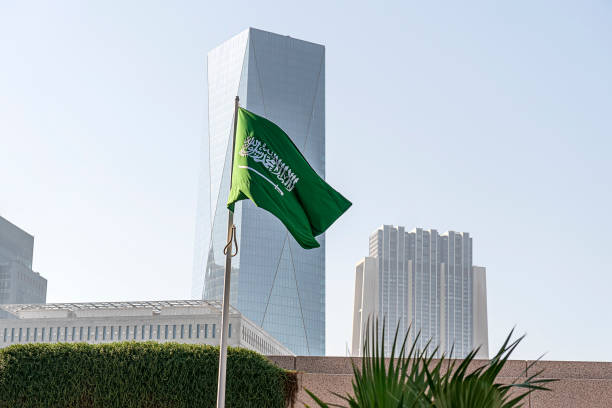
The KSA offers one of the most lucrative and investor-friendly corporate environments in the Middle East. Accelerated by the pro-investment reforms of Vision 2030, including the deregulation of foreign ownership thresholds and automated digital registries, Saudi market entry is highly accessible for enterprises that strictly adhere to prescribed regulations.
Sadany & Partners Law Firm provides statutory guidance to entrepreneurs and enterprises at each stage of the corporate establishment in the KSA, supervising foreign direct investment licensing, company registration, and compliance mobilization. This article explains the process step by step.
1. Understanding the Legal Framework
The business environment in the KSA is primarily regulated by the following:
- Companies Law (2022 Update) – Regulates the formation, management, and dissolution of all legal entities.
- Investment Law (Regulations of the Saudi Ministry of Investment (“MISA”) – Regulates foreign investment and licensing through the Saudi Ministry of Investment.
- Commercial Registry Law – Regulates registration with the Ministry of Commerce (MOC).
- Tax, labor, and Saudization regulations—enforced by the ZATCA, the General Organization for Social Insurance (GOSI), and the Ministry of Human Resources, respectively.
Each type of entity—whether an LLC, a JSC, or a branch of a foreign company—is subject to a specific legal structure, ownership rules, and capital requirements.
2. Step 1: Choosing the Appropriate Legal Structure
Choosing the correct legal entity framework establishes a critical baseline for your business. Your decision determines your tax obligations, legal liability, ownership options, and scope of operations.
|
Type |
Description |
Most suitable in the following cases |
|---|---|---|
|
Limited liability company (LLC) |
The most common; the number of shareholders ranges from 1 to 50. |
SMEs and foreign affiliates |
|
Joint stock company (JSC) |
For large projects or future IPOs. |
Business groups or major investors. |
|
Branch of a foreign company |
It operates under the name of its parent company. |
Foreign companies contracted by the KSA. |
|
- One-person Company (OPC): |
100% ownership by a single individual. |
Entrepreneurs or consultants |
Legal advice: To capitalize on full foreign ownership allowances and retain long-term structural scalability, international investors routinely utilize the LLC framework as their primary entry vehicle under the statutory oversight of MISA.
3. Step 2: Applying for an investment license
If any of the shareholders are foreign nationals, the first step is to obtain the MISA investment license.
Required Documents
- The parent company's commercial registration (certified and translated).
- Last year's financial statements.
- Copies of the passports of the shareholders/directors.
- Action plan and description of the proposed activity.
After submitting the application through the MISA online portal, approval typically takes 5 to 10 business days.
Our Role:
We verify the authenticity of the documents, handle the Arabic translation and embassy certification, and submit the license application to the MISA on your behalf.
4. Step 3: Trademark Reservation and Drafting of Articles of Association
The following process is followed after MISA approval:
- Reserving your business name with the MOC.
- Drafting the articles of association in Arabic, specifying the shareholders, capital, objectives, and management rules.
- Handling the notarization process for the articles of association with a licensed notary or leveraging the MOC portal for rapid electronic filing.
Tip: Including flexible provisions (for capital increases, partner withdrawals, or changes in management structure) can help avoid future legal costs.
5. Step 4: Commercial register.
Next, your company must obtain a commercial registration certificate from the MOC.
- The Commercial Registry confirms your company's legal status in the KSA.
- The required documents include the notarized articles of association, the MISA license, and proof of the company’s registered office.
- Once approved, you will receive a commercial registration number, which serves as your company’s official identification.
Once you are registered with the Commercial Registry, you can legally enter into contracts, hire employees, and open bank accounts.
6. Step 5: Post-incorporation filings
Even after obtaining your business registration, there are several mandatory registrations you must complete before you can begin operating in full:
|
Competent Authority |
Purpose of Registration |
|---|---|
|
ZATCA |
Corporate tax and value-added tax registration. |
|
GOSI |
Social Security for Employees. |
|
Chamber of Commerce |
Validation of work and issuance of certificates. |
|
Local address |
Mandatory for all companies in the KSA. |
|
Municipality (Balady) |
For licensing offices or retail stores. |
We will handle all of these procedures together to ensure your full compliance within a few weeks.
7. Step 6: Corporate banking services and capitalization
- Open a business bank account using your business registration.
- Deposit the prescribed minimum share capital based on your activity classification, which commonly scales between SAR 100,000 and SAR 500,000.
- Obtain a capital certificate to complete the company incorporation process.
Tip: Some activities (such as consulting, contracting, or trading) may require a minimum amount of capital. Our legal team will provide you with the necessary advice.
8. Step 7: Compliance with employment, visa, and residency requirements
Once your company is up and running, you must comply with the business requirements in the KSA:
- Registration of employees with the GOSI.
- Submitting applications for work visas and residence permits through the “Qiwa” and “Mukeem” portals.
- Meeting Saudization quotas (through the Nitaqat program) applicable to your sector.
Sadany & Partners Law Firm provides comprehensive legal support in human resources, including employment contracts that comply with applicable laws and legal advice regarding labor law.
9. Step 8: Launch and Ongoing Compliance
Congratulations! Upon completion of these statutory phases, your corporation is formally authorized to execute commercial transactions across the KSA.
But compliance doesn't end once operations begin. The ongoing requirements include:
- Renewal of annual licenses (for the MISA and the MOC).
- Filing tax returns and conducting tax audits in accordance with the Saudi Labor Law.
- Update employment contracts in accordance with Saudi labor law.
- Board resolutions and amendments thereto to reflect any changes to the company.
We offer ongoing legal compliance services to ensure your company remains in compliance with legal requirements year after year.
Example: From Licensing to Launch – A Client Success Story
An international renewable energy enterprise based in Germany has formally instructed Sadany & Partners Law Firm to oversee the statutory incorporation of its commercial branch in the KSA.
- We obtained the MISA industrial license within 8 days.
- Our firm prepared the bilingual Articles of Association (AoA) and obtained the notary's online approval.
- We completed the commercial registry, tax, and social security registrations in less than 30 days.
- They helped us obtain work visas and certificates of conformity for their first project in the KSA.
Within six weeks, their Riyadh-based operations achieved full legal mobilization, establishing an absolute state of readiness for any institutional audits or inspections.
Why us?
- A licensed Saudi legal team: Our team possesses deep statutory expertise in managing complex foreign investment licensing applications before MISA, coordinating commercial registrations with the MOC and ZATCA.
- Cross-border expertise: We serve investors from Egypt, the Gulf, Europe, and Asia.
- Transparent pricing: Fixed legal fees and interim invoices.
- Comprehensive support: Our services include incorporation, human resources, contractual architecture, tax advisory, and dispute resolution through traditional litigation and arbitration.
- Strategic Legal Vision: We ensure that your company’s structure supports future expansion or investment rounds.
Conclusion
Book your consultation appointment now
Incorporating an entity in KSA opens structural pathways to unprecedented market growth, yet demands a highly calculated market entry strategy that balances commercial ambitions with localized legal parameters.
Transcending routine company formation, Sadany & Partners Law Firm acts as your permanent corporate counsel, guaranteeing absolute statutory alignment across the KSA and structuring your operational frameworks to facilitate secure, scalable expansion.
Contact us today to receive a customized business setup roadmap for your operations in the KSA, including licensing options, timelines, and cost estimates.
From regulatory licensing to final operational launch, Sadany & Partners Law Firm bridges the gap between foreign direct investment strategy and full legal implementation across the KSA.
RELATED POSTS

- /
- 2026-06-25